
The Principle and Application of North Finders: A Comprehensive Guide
A north finder (also widely known as a 'gyro compass' or 'north seeker') is an advanced inertial measurement system designed to determine the true north direction of a specific position. By measuring the projection of the Earth's rotation rate on the local horizontal plane, this fully self-contained system operates without any external references.
Unlike traditional magnetic compasses, a gyroscope-based north finder is completely unaffected by daytime variations, adverse weather conditions, geomagnetic interference, or poor site visibility, making it an indispensable tool in high-precision engineering.
Classification of Gyroscopic North Finders
Depending on the core inertial sensors and architectural design, north finders are generally categorized into three primary types:
(1) Two-Degree-of-Freedom Gyroscope Models: These systems utilize an Earth rotation sensor most commonly seen in 'pendulous gyro north seekers'.
(2) Single-Axis Rate Gyroscope Systems: Driven by a high-precision single-axis rate sensor, these are typical configurations for 'strapdown gyroscope north seekers'.
(3) Triaxial-Axis Dynamic Gyroscope Equipment: Employs advanced dynamic sensors, widely recognized as 'dynamic gyro north seekers', to deliver multi-axis measurements.
How Does a North Finder Work? (The Physics Explained)
The underlying core principle of any modern north seeker relies on measuring the horizontal component of the Earth's rotation angular velocity ωe.
The Earth rotates at a constant self-reflection angular velocity. For any given point on Earth located at latitude $\phi$, this angular velocity can be mathematically decomposed into two distinct components:
1. Horizontal Component ωe1 = ωecosφ: This vector points directly toward True North along the Earth's meridian line.
2. Vertical Component ωe2 = ωesinφ: This vector extends vertically upward, perpendicular to the Earth's surface.
By utilizing high-sensitivity inertial technology (such as Fiber Optic Gyros or MEMS Gyros), the north finder isolates and measures the horizontal vector ωe1. Through strapdown compass effect algorithms, the system can instantly calculate the precise true north azimuth relative to the carrier.
Key Technical Applications
As a pillar technology for modern navigation and orientation, north-seeking systems are cross-functional across both defense and industrial sectors:
- Defense & Aerospace: Vital for initial dynamic/static calibration, missile launch alignment, weapon aiming, radar positioning, and satellite/ship inertial navigation systems (INS).
- Geophysical & Oil Exploration: Extensively used in shale gas exploration, oil drilling direction control, and trajectory surveying.
- Civil Engineering & Mining: Critical for heading machines in underground coal mines, tunnel construction alignment, and geodetic surveying where GNSS (GPS) signals are completely blocked.
Ericco's Featured North Seeking Solutions
To meet diverse precision and environmental challenges, Ericco Inertial Technology offers industry-proven north-seeking systems customized for both static and high-dynamic modes:
1. High-Precision Fiber Optic Gyro (FOG) Solutions
- For defense, tactical-grade calibration, and high-reliability environments, our FOG series delivers exceptional stability:
ER-NFS-02 (High-Precision FOG): Features a dynamic working mode with high reliability, delivering real-time vehicle movement, velocity, and positioning telemetry. Ideal for radar, antennas, and weapon aiming calibration. - ER-NFS-03 (Low-Cost 3-Axis FOG): Integrates a 3-axis FOG, an Inertial Measurement Unit (IMU), a digital signal processing unit, and robust mechanical structures to deliver cost-efficient, fast-response true north azimuth solutions.
2. Compact & Robust Strapdown Compass Systems
ER-FNS-03 (Strapdown FOG North Seeker): Composed of a three-axis gyroscope, a three-axis accelerometer, and advanced data acquisition modules. Using a closed-loop fiber optic gyro as its core, it excels in static initial alignment for missile launches, oil drilling, and tunnel construction.
Looking for the Right North Seeker for Your Project?
Ericco provides a wide spectrum of inertial solutions from the smallest size triaxial MEMS north seekers to ultra-high-precision FOG systems. [Contact our technical engineering team today] for customized datasheets and pricing info.
FAQ
- A magnetic compass points to Magnetic North.
- It easily fails near steel, magnets, or power lines.
- A north finder calculates True North using Earth's rotation.
- It is immune to all magnetic interference.
- No. It cannot find north at the absolute poles.
- The Earth's horizontal rotation signal drops to zero there.
- Most devices experience reduced accuracy above 80° latitude.
- Usually 1 to 5 minutes.
- High-precision systems can take under 60 seconds.
- The device must remain completely still during this time.
- They use different gyro technologies:
- FOG (Fiber Optic): Most accurate, longest life, highest cost.
- DTG (Dynamically Tuned): Traditional mechanical style, high accuracy, wear over time.
- MEMS (Silicon chip): Smallest size, lowest cost, lower accuracy.
- No. It is completely autonomous.
- It relies purely on internal inertial sensors.
- It works underground, inside tunnels, and during GPS jamming.
More Technical Questions
1.Technical innovation of north finder in directional drilling
2.Do You Know the FOG North Finder?
3.Application of MEMS Accelerometer in North Finder
4.The internal structure of the north finder
5.Application of Fiber Optic Gyroscope North Finder
6.Does the north finder only find north?
Products in Article
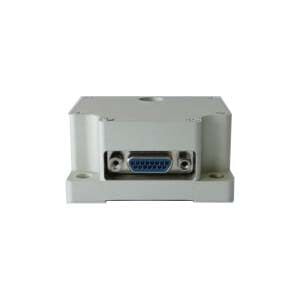
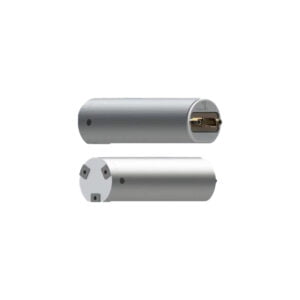 MEMS Triaxial North Seeker for Mining
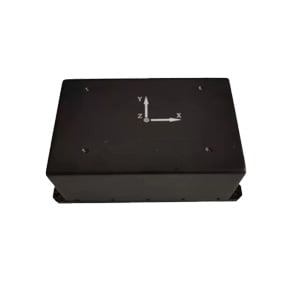
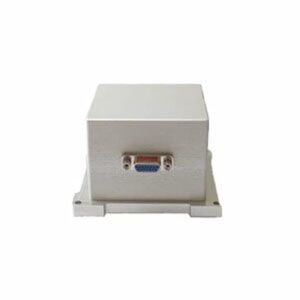 Cost-Efficient Triaxial MEMS North Seeker