

In the mining industry, which places extremely high demands on reliability, environmental adaptability, and cost control, the requirements for north finding instruments have evolved from a single pursuit of high precision to a comprehensive consideration of environmental adaptability, dynamic performance, cost, and integration.
Fiber optic north finders are regarded as the gold standard for azimuth reference measurement, but their limitations are gradually becoming apparent. Meanwhile, the MEMS directional module, represented by the ER-MNS-09, is emerging as an innovative solution to the harsh challenges of mining due to its range of advantages.
Main Limitations of Fiber Optic North Finders
High Comprehensive Cost
The core optical components of fiber optic north finders are precise and complex to manufacture, resulting in high initial investment. If damaged in harsh underground environments, repair cycles are long and costs are significant.
Size and Environmental Sensitivity
Fiber optic north finders are typically bulky, requiring separate installation space and a stable base. Additionally, their core components, such as the fiber optic coils, are sensitive to temperature variations. Although certain compensation mechanisms exist, the potential impact of thermal drift on long-term stability must still be considered in areas with significant underground temperature gradients. Most importantly, despite possessing a degree of vibration resistance, their fundamental nature as precision optical instruments makes them ill-suited to withstand the sustained, high-intensity vibration and shock transmitted by heavy mining machinery over extended periods.
The Innovative Advantages of MEMS Directional Modules and Their Alignment with Modern Mining Applications
Extreme Compactness and Environmental Adaptability
The ER-MNS-09 MEMS directional module features an unconventional cylindrical design with a diameter of just 30mm. It can be directly embedded into drill pipes, probe housings, or integrated into other equipment within confined spaces, achieving unprecedented miniaturization and embedded installation.
This design stems from its core Micro-Electro-Mechanical Systems (MEMS) technology. Its all-solid-state structure contains no moving parts, endowing it with inherent, excellent resistance to shock and vibration. It can withstand the intense vibrations transmitted during drill bit rock breaking, operating reliably in harsh mechanical environments where traditional precision instruments would struggle to survive, while also tolerating temperatures up to 125°C. Its environmental adaptability far exceeds that of fiber optic devices.
Core Capabilities
The ER-MNS-09 first performs rapid initial north seeking on a static base, with an azimuth accuracy of 0.5° and an attitude accuracy ≤ 0.2°. It can then switch to attitude-hold tracking mode, maintaining alignment for up to 20 minutes.
In this mode, it outputs the carrier's heading, pitch, and roll information at a high frequency of up to 100 Hz. This allows drill operators to monitor and adjust the borehole trajectory in real-time during the drilling process. This capability transforms the north finder from a back-end calibration tool into a front-end sensor directly involved in production control.
Cost Advantage and Integration
Utilizing MEMS technology, the production cost of the ER-MNS-09 is effectively controlled. It integrates a tri-axis MEMS gyroscope, a tri-axis MEMS accelerometer, processing circuitry, and communication interfaces within a single, compact unit. Data is output via a standard digital interface (e.g., RS-422).
Conclusion
While fiber optic north finders retain value in specific applications requiring the establishment of a high-precision reference, their limitations in terms of total cost of ownership, environmental adaptability, and dynamic measurement make it difficult for them to fully meet the demands of modern mining for efficient, dynamic, and highly robust operations. In contrast, the MEMS directional module, with its compact and robust embedded design, measurement capabilities, strong environmental tolerance, and outstanding cost-effectiveness, precisely addresses the practical challenges of the underground environment.
Application Techniques
1.MEMS Gyro Directional Module fully upgraded,Redefined measurement standards
2.How can MEMS directional module achieve precise targeting?
3.ER-Gyro-15: MEMS Directional Sensor that Redefines Downhole Exploration Accuracy
4.MEMS Gyroscope Directional Module for GWD: New solutions for well logging
5.MEMS Directional Sensor Newly Released: an Innovative Tool for Oil Drilling Technology
6.Accurate Directional Attitude Measurement Helps Revolutionize Underground Engineering!
More Products
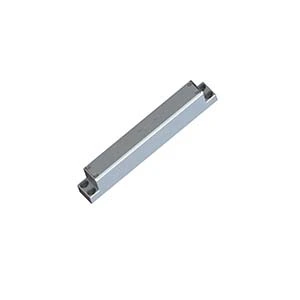 MEMS Gyro Tools Directional Module(Can replace fluxgate directional module)
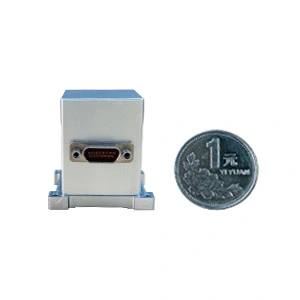 Quick MEMS North Seeker for Heading Machine
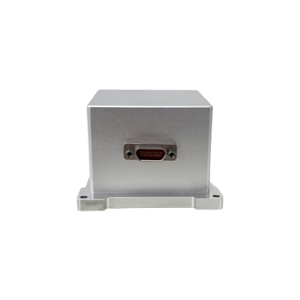 Dynamic MEMS north Seeker for Heading Machine
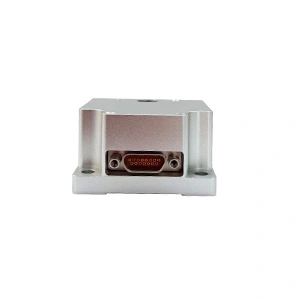 Low Cost MEMS North Seeker for Heading Machine
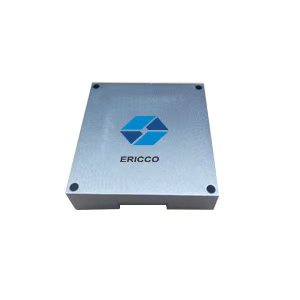 High Accuracy Single-Axis MEMS Gyro
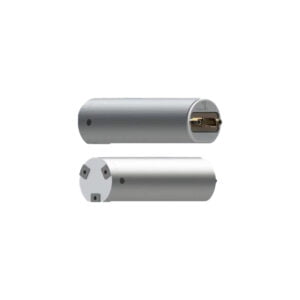 MEMS Directional Module For Mining Well-Trajectory Measurement Device