
Introduction
A ring laser gyroscope (RLG) is an advanced navigation device that uses the principles of laser physics to detect and measure angular motion. This technology has revolutionized navigation systems, and it is now used in various applications, such as in aircraft, satellites, and even submarines.
While the first experimental ring laser gyroscope was demonstrated in the US by Macek and Davis in 1963, the very first usable gyrocompass goes back as far as 1904 and was invented by German inventor Hermann Anschütz-Kaempfe. Gyroscopes have advanced significantly over time, transitioning from mechanical technology to self-contained optical laser technology like the Honeywell Ring Laser Gyroscope (RLG).
What is a Ring Laser Gyroscope?
A ring laser gyroscope is a device that measures angular velocity using the Sagnac effect. The Sagnac effect is a phenomenon where the phase of light changes as it travels through a rotating medium. The device is constructed using a ring-shaped optical cavity with mirrors at each end. The ring cavity is filled with a laser medium, which generates a beam of coherent light that circulates inside the cavity. The beams are then split into two counter-propagating beams, which travel in opposite directions along the ring. The counter-propagating beams interfere with each other, creating a pattern of interference fringes. Compared to conventional spinning gyroscopes, which rely on a spinning rotor to detect changes in orientation, RLGs are generally more accurate, faster, and more reliable. This is because they have no moving parts and are not subject to the same mechanical wear and tear as spinning gyroscopes. They also have a wider dynamic range and are less affected by external vibrations and other disturbances.
Why Ring Laser Gyroscopes Are Important
Modern navigation systems require accurate measurement of angular motion to determine position, orientation, and heading.
While MEMS gyroscopes are commonly used in consumer electronics and industrial applications, Ring Laser Gyroscopes are preferred in applications where accuracy and reliability are critical.
Key benefits include:
- Extremely high angular measurement accuracy
- Excellent long-term stability
- No moving mechanical components
- High resistance to vibration and shock
- Reliable performance in harsh environments
These characteristics make Ring Laser Gyroscopes a preferred choice for aircraft navigation systems, missile guidance systems, submarines, and strategic defense platforms.
What Is the Sagnac Effect?
The operating principle of a Ring Laser Gyroscope is based on the Sagnac Effect, discovered by French physicist Georges Sagnac in 1913.
The Sagnac Effect states that when two light beams travel in opposite directions around a closed loop and the loop rotates, the travel distances experienced by the beams become different.
This difference causes a measurable frequency shift between the two laser beams.
By measuring this frequency difference, the gyroscope can accurately determine the angular rotation rate of the platform.
The Sagnac Effect forms the foundation of all modern optical gyroscope technologies, including Ring Laser Gyroscopes and Fiber Optic Gyroscopes.
Main Components of a Ring Laser Gyroscope
A Ring Laser Gyroscope consists of several highly precise optical and electronic components.
Laser Cavity: The laser cavity forms a closed optical path, usually in a triangular or square configuration. It provides the environment where laser beams circulate continuously.
Mirrors: Highly polished mirrors are positioned at the corners of the cavity. These mirrors reflect the laser beams and maintain the closed optical loop. The quality and alignment of the mirrors directly affect gyroscope performance.
Laser Medium: Most Ring Laser Gyroscopes use a helium-neon gas mixture as the laser medium. The gas generates coherent laser beams that travel in opposite directions around the optical path.
Photodetector: A photodetector combines the counter-propagating laser beams and measures the interference pattern created by the frequency difference.
Signal Processing Unit: The signal processing electronics convert optical measurements into digital angular velocity information that can be used by navigation systems.
Step-by-Step Working Process
The operation of a Ring Laser Gyroscope can be explained in six steps.
Step 1: Laser Generation
The helium-neon gas inside the cavity generates two coherent laser beams.
Step 2: Opposite Beam Propagation
The laser beams travel simultaneously around the optical cavity in opposite directions.
Step 3: Platform Rotation
When the gyroscope rotates, the effective path length for each beam changes.
Step 4: Frequency Difference Formation
One beam experiences a slightly longer path while the other experiences a shorter path, creating a frequency difference.
Step 5: Interference Detection
The two beams are combined to produce an interference pattern.
Step 6: Angular Velocity Calculation
The detected frequency difference is processed electronically to calculate rotational speed and direction.
The greater the rotation rate, the larger the frequency difference between the two laser beams.
Ring laser gyroscopes for inertial navigation
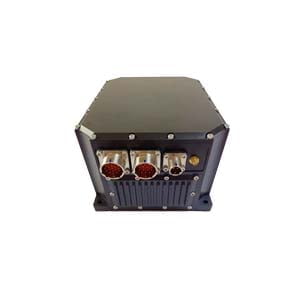
Ring laser gyroscopes are advantageous for inertial navigation systems (INS) due to their lightweight, compact, and self-contained design, which eliminates friction and prevents extra drag in the system. The latest models are significantly smaller, making them ideal for applications where accuracy, reliability, and efficient use of space are critical.
INS are used for guidance in ships, spacecraft, aircraft, and missiles, especially in environments where GPS technology is not feasible. Aerial navigation primarily employs two types of INS: stabilized platform INS and strap-down INS.
Stabilized platform INS feature three or more accelerometers and gimballed spinning mass gyros that maintain platform alignment and stability while the aircraft is in motion.
Strap-down INS also contain accelerometers and gyroscopes, including RLGs, which are secured to the frame of the aircraft, eliminating the need for gimbals used in stabilized platform INS and their associated reliability issues.
Advantages of Ring Laser Gyroscopes
Ring Laser Gyroscopes offer several important advantages compared with traditional mechanical gyroscopes.
- Extremely High Accuracy: RLGs provide exceptional measurement accuracy suitable for navigation-grade applications.
- Excellent Long-Term Stability: The absence of moving mechanical components significantly reduces drift and wear.
- High Reliability: RLGs can operate continuously for many years with minimal maintenance requirements.
- Strong Environmental Resistance: They perform reliably under vibration, shock, temperature changes, and harsh operating conditions.
- Fast Dynamic Response: RLGs respond quickly to changes in angular motion, making them suitable for high-speed navigation applications.
Ring Laser Gyroscope vs Fiber Optic Gyroscope vs MEMS Gyroscope
| Feature | RLG | FOG | MEMS |
|---|---|---|---|
| Accuracy | Excellent | Excellent | Medium |
| Cost | High | Medium | Low |
| Size | Large | Medium | Small |
| Stability | Excellent | Excellent | Moderate |
| Aerospace | Excellent | Excellent | Limited |
| Consumer | No | No | Yes |
Each technology serves different application requirements depending on accuracy, size, power, and cost constraints.
Ring laser gyroscopes for transportation systems
Due to their distinct characteristics, ring laser gyroscopes are increasingly becoming a focal point in the transportation systems industry. Ring laser gyroscopes are characterized by their small size, compactness, lightweight construction, and radiation resistance. Although they have primarily been utilized in air and space vehicles, there is a rising trend in incorporating them into other modes of transportation, particularly inertial navigation systems, leading to a faster expansion of the gyroscope market than ever before.
Due to their superior accuracy and performance stability, ring laser gyros are also extensively used in military operations, specifically in missile navigation, but also in military aircraft and ground vehicles.
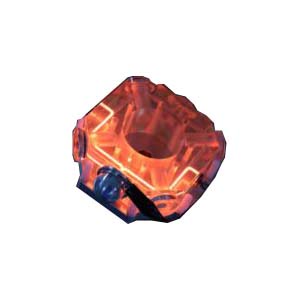
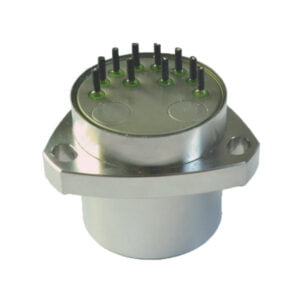
Today, Honeywell's GG1320 digital RLG is the industry standard for precision rotation measurement. It is an affordable, high-performance inertial sensor with the electronics, power supply and sense element packaged into an easy-to-use compact unit. It provides an output of the compensated measured rotation in a digital data stream.
Apart from ring laser gyros (RLG), Honeywell gyro technologies include, fiber-optic gyros (FOGS) and micro-electro-mechanical systems (MEMS) gyros.
Typical Applications of Ring Laser Gyroscopes
- Aerospace Navigation: Commercial and military aircraft rely on RLGs for accurate attitude and heading determination.
- Missile Guidance Systems: RLGs provide precise rotational measurements required for trajectory control.
- Marine Navigation: Submarines and ships use RLG-based inertial navigation systems when GPS signals are unavailable.
- Spacecraft Navigation: Satellites and launch vehicles use Ring Laser Gyroscopes for attitude control and stabilization.
- Surveying and Mapping: High-precision surveying systems use RLG technology for accurate orientation measurements.
- Defense Systems: Weapon stabilization systems and military platforms depend on the reliability of Ring Laser Gyroscopes.
Factors Affecting Ring Laser Gyroscope Performance
Several factors influence the performance of a Ring Laser Gyroscope.
- Mirror Quality: Mirror surface precision directly affects optical path stability.
- Temperature Stability: Temperature changes may impact laser characteristics and cavity dimensions.
- Laser Wavelength Stability: Stable laser frequency is essential for accurate measurement.
- Mechanical Alignment: Precise alignment of optical components is critical for optimal performance.
- Signal Processing Algorithms: Advanced filtering and compensation algorithms improve measurement accuracy and reduce noise.
FAQ
Q: What is a Ring Laser Gyroscope?
A: A Ring Laser Gyroscope is an optical gyroscope that uses laser beams and the Sagnac Effect to measure angular rotation.
Q: Why is helium-neon gas used?
A: Helium-neon gas produces highly stable and coherent laser beams suitable for precision measurements.
Q: What is the Sagnac Effect?
A: The Sagnac Effect is the phenomenon that creates a frequency difference between counter-propagating light beams when a closed optical path rotates.
Q: Is a Ring Laser Gyroscope more accurate than a MEMS gyroscope?
A: Yes. Ring Laser Gyroscopes generally provide significantly higher accuracy and stability than MEMS gyroscopes.
Q: What causes lock-in in a Ring Laser Gyroscope?
A: Lock-in occurs when the frequency difference between the two laser beams becomes extremely small at low rotation rates.
Q: Can Ring Laser Gyroscopes replace GPS?
A: No. RLGs are typically used within inertial navigation systems and often work together with GNSS technologies to improve navigation reliability.
Conclusion
Ring Laser Gyroscopes remain one of the most accurate and reliable inertial sensors available today. By utilizing the Sagnac Effect and advanced optical technology, they provide exceptional angular measurement accuracy for aerospace, defense, marine navigation, and surveying applications.
Although alternative technologies such as Fiber Optic Gyroscopes and MEMS gyroscopes continue to improve, Ring Laser Gyroscopes remain the preferred solution for mission-critical navigation systems where precision, reliability, and long-term stability are essential.
More Technical Questions
1.How accurate is MEMS gyroscope?
2.Where are MEMS Gyroscopes Used?
4.What is INS and How does it Work?
5.Differences between IMU, AHRS, VRU and INS
Products in Article