




Introduction
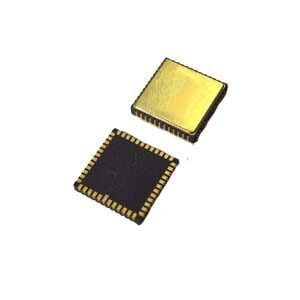
ER-NSMG-01 is a north-seeking type MEMS angular velocity sensor, specially designed for north-seeking, orientation and initial alignment use in surveying tools/gyro tools, mining/drilling equipment, unmanned aircraft launch systems, satellite antennas, target tracking systems, etc.
ER-NSMG-01 is specifically designed for north-seeking applications. Its advanced differential sensor design can resist the influence of linear acceleration, enabling it to operate in extremely harsh environments, even in the presence of shocks and vibrations.
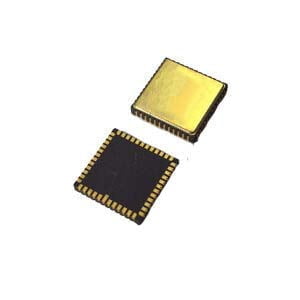
ER-NSMG-01 uses a sealed ceramic LCC surface mount package and can operate under a 5V power supply and a wide temperature range (-45°C to +125°C).
Features
North-seeking type MEMS angular velocity sensor
Digital output (SPI slave)
5V operation (4.75~5.25V supply)
Low power consumption (35 mA)
High shock and vibration rejection
Hermetically sealed ceramic LCC surface mount package (11x11x2mm)
Integrated temperature sensor
RoHS compliant
Application areas
North seeking in logging tools/gyro tools
Pointing, steering in advanced mining/drilling equipment
Direction pointing and tracking in satellite antenna
Orientating and positioning in railway train system
Precision platform attitude measuring and controls
North finding and positioning in land surveying/land mobile mapping system
Petroleum exploration;
Specification
| Parameters | ER-NSMG-0101 | ER-NSMG-0102 | ER-NSMG-0103 | |
| Bias stability (1σ 10s) | 0.6 | 0.6 | 0.6 | deg/hr |
| Bias error over temperature (1σ) | 3 | 10 | 3 | deg/Hr |
| Bias temperature variations, calibrated (1σ) | <0.3 | <1 | <0.5 | deg/Hr |
| Angular random walk | <0.02 | <0.03 | <0.05 | °/√h |
| Scale factor at 25°C | 80000 | 28000 | 20000 | lsb/deg/s |
| Scale factor repeatability (1σ) | <50 | <50 | <50 | ppm |
| Scale factor vs temperature (1σ) | 300 | 300 | 300 | ppm |
| Scale factor non-linearity (1σ) | <200 | <300 | <400 | ppm |
| Resolution | 24 | 24 | 24 | bits |
| Data rate | 2k | 12K | 12K | Hz |
| Group delay | 20 | <5 | <3 | ms |
| Bandwidth (-3dB) | 12 | 50 | 100 | Hz |
| Noise peak to peak | ±0.003 | ±0.01 | ±0.05 | deg/s |
| G-Sensitivity | <1 | <1 | <1 | °/hr/g |
| Vibration rectification error | <1 | <1 | <1 | °/hr/g (rms) |
| Startup time | 1 | 1 | 1 | s |
| Sensor resonant frequency | 11~13 | K | ||
| Environment, power and physical | ||||
| Shock (charged) | 1000g, 1ms, half sine wave | |||
| Shock (uncharged) | 10000g, 1.0ms, half sine wave | |||
| Vibration (operating) | 12grms, 20Hz to 2KHz random vibration | |||
| Operating temperature | -40°C~125°C | |||
| Max storage (survival) temperature | -55°C~125°C | |||
| Supply voltage | 5±0.25V | |||
| Current consumption | 40mA | |||
Application Techniques
1.Basic Knowledge of Bias Stability of MEMS Gyroscope
2.Classification And Performance Improvement Of MEMS Gyroscope
3.Comparison Of Technical Specifications Of Navigation Grade MEMS Gyroscope
4.MEMS Gyroscope: The Third Generation Of Gyroscopes Is Leading The Way
5.MEMS Gyroscope: Sensitive Structure | Detection Circuit | Integrated Package
6.Research On Segmented North Seeking Orientation Based On MEMS Gyroscope