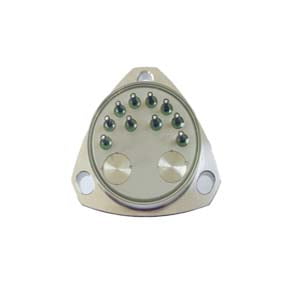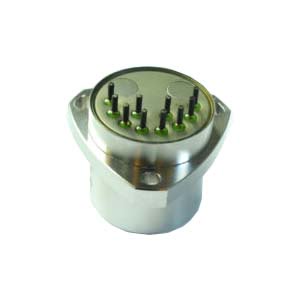

Introduction
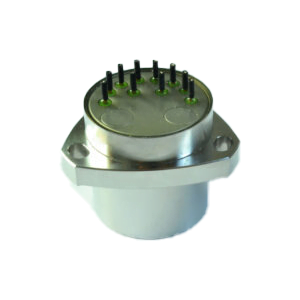
Three accelerometers is an inertial sensor, which can measure the linear acceleration due to gravity. That can be widely used in vibration detection, attitude control, security alarm, consumer applications, motion recognition and status recording.
There are many types of acceleration sensors, such as piezoresistive acceleration sensors, flexible acceleration sensors, hydromagnetic levitation accelerometers, quartz capacitive accelerometers 、MEMS accelerometers etc.
Acceleration sensors are divided into open-loop and closed-loop types. Generally, open-loop sensors have lower technical indicators and closed-loop sensors. The technical indicators are relatively high.
Therefore, considering only the technical indicators, we plan to use closed-loop sensors. The following analyzes and compares the performance advantages and disadvantages of the liquid magnetic levitation accelerometer, quartz capacitive accelerometer, and MEMS accelerometer.
1.Liquid magnetic levitation accelerometer
The liquid magnetic levitation accelerometer is an accelerometer widely used in early MWD instruments. It is a pendulum accelerometer based on liquid floating pendulum accelerometer with three-dimensional maglev centering control. The magnetic suspension centering further reduces the interference torque acting on the float pendulum assembly, and makes the output axis have a very stable direction, and reduces various random interference torque .Its main advantages are good vibration resistance, shock resistance, and high temperature resistance; the disadvantage is that it takes a long time to reach normal operation and has poor temperature characteristics. It is suitable for all kinds of high precision inertial navigation system, platform compass and satellite, spacecraft flight control system.
2.Quartz capacitive accelerometer
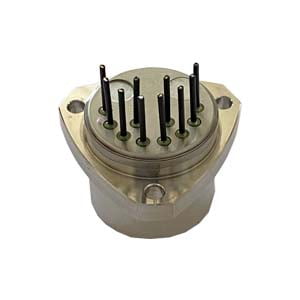
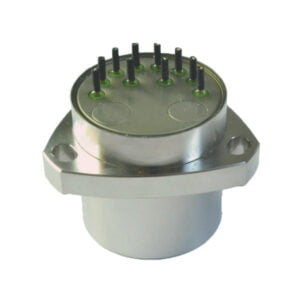
Quartz Capacitive accelerometer is an acceleration sensitive device developed for navigation. The instrument uses the piezoelectric properties of quartz crystal itself to excite the rigid beam as a resonant element. The quartz crystal material has good mechanical stability and eliminates the creep phenomenon that is common in metal resonators. Its advantage is high accuracy, good stability, high-temperature resistance, and good temperature characteristics; but the aerospace type has poor impact resistance, because after the limit pin is added to the civil acceleration, its vibration resistance and impact resistance are greatly improved, and it is now also a while drilling instrument pick the accelerometer used.
3.MEMS accelerometer
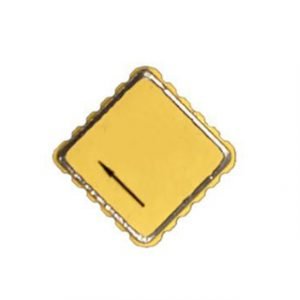
MEMS accelerometer is a new type of accelerometer developed in recent years.It uses a vibrating beam as an acceleration sensor. The vibrating beam is made of silicon or quartz crystal material and vibrates at a resonant frequency by means of electrostatic or piezoelectric action. The double-ended beam vibrates in vibration-driven mode. When the inertial force formed by the acceleration is added to the beam, the input acceleration will cause the change of the tension of the vibration beam, so that the resonant frequency of the vibration beam will change, the resonant frequency of one vibration beam will increase, and the resonant frequency of the other vibration beam will decrease, through signal processing, its differential frequency corresponds to the size of the input acceleration. Due to the factors of structure and production process, its most prominent features are small size, vibration resistance, shock resistance, and high temperature resistance. The disadvantage is poor temperature characteristics.
MEMS accelerometer can be widely used in vibration detection, attitude control, security alarm, consumer applications, motion recognition and status recording. MEMS accelerometers are combined with MEMS gyroscopes and magnetometers to create MEMS IMU (inertial measurement units)
Why Understanding Three Accelerometers Technologies Matters
Accelerometers are among the most important sensors used in modern navigation, aerospace, industrial automation, robotics, and monitoring systems. They measure linear acceleration and help determine motion, vibration, tilt, and orientation.
However, not all accelerometers are designed for the same purpose. Different technologies offer varying levels of accuracy, stability, power consumption, and environmental adaptability. Selecting the wrong accelerometer may result in reduced system performance, increased costs, or failure to meet application requirements.
Understanding the strengths and limitations of MEMS, quartz, and servo accelerometers allows engineers and system designers to make informed decisions and select the most suitable solution for their projects.
Comparison of the Three Accelerometers Technologies
The following table provides a quick overview of the key differences among MEMS, quartz, and servo accelerometers.
| Feature | MEMS Accelerometer | Quartz Accelerometer | Servo Accelerometer |
|---|---|---|---|
| Accuracy | Medium | High | Very High |
| Bias Stability | Medium | High | Excellent |
| Noise Performance | Moderate | Low | Very Low |
| Power Consumption | Low | Medium | High |
| Size | Small | Medium | Large |
| Weight | Light | Medium | Heavy |
| Cost | Low | Medium | High |
| Long-Term Stability | Moderate | Excellent | Excellent |
| Aerospace Applications | Limited | Excellent | Excellent |
| Consumer Electronics | Excellent | Limited | Not Suitable |
This comparison demonstrates that no single accelerometer technology is ideal for every application. The optimal choice depends on the required performance, environmental conditions, integration constraints, and budget.
Which Accelerometer Is Best for Your Application?
Choosing the right accelerometer depends on the specific requirements of the application.
MEMS Accelerometers
Best suited for:
- UAVs and drones
- Robotics
- Automotive electronics
- Industrial monitoring
- Consumer devices
MEMS accelerometers are favored for their compact size, low cost, and low power consumption. They provide sufficient accuracy for many commercial and industrial applications.
Quartz Accelerometers
Best suited for:
- Aerospace systems
- Geophysical surveys
- High-end inertial navigation
- Precision measurement equipment
Quartz accelerometers offer better stability and lower drift than MEMS devices, making them suitable for applications requiring long-term measurement accuracy.
Servo Accelerometers
Best suited for:
- Strategic navigation systems
- Missile guidance
- High-precision inertial navigation
- Defense applications
Servo accelerometers deliver the highest accuracy and stability, making them the preferred choice for mission-critical applications.
The Role of Accelerometers in Inertial Navigation Systems
Accelerometers are a fundamental component of inertial navigation systems (INS), inertial measurement units (IMU), and attitude heading reference systems (AHRS).
In these systems, accelerometers work together with gyroscopes to provide:
- Position estimation
- Velocity calculation
- Attitude determination
- Motion tracking
The accuracy of the accelerometer directly affects the overall performance of the navigation system. High-performance accelerometers help reduce drift and improve long-term navigation reliability.
As autonomous systems, UAVs, and intelligent vehicles continue to evolve, the demand for high-quality accelerometers is increasing rapidly.
Future Trends in Three Accelerometers Technology
Three accelerometer technology continues to evolve as industries demand higher precision, lower power consumption, and greater integration.
Several important trends are shaping the future of the industry:
1. High-Performance MEMS Development
Modern MEMS accelerometers are achieving levels of performance that were previously only possible with larger and more expensive technologies.
2. Advanced Sensor Fusion
Combining accelerometers with gyroscopes, magnetometers, and GNSS receivers improves overall system accuracy and reliability.
3. Artificial Intelligence Calibration
Machine learning algorithms are increasingly used to compensate for sensor errors, improve stability, and enhance navigation performance.
4. Miniaturized Navigation Systems
The demand for smaller and lighter navigation equipment is driving innovation in three accelerometers packaging and integration technologies.
These developments are expected to further expand the use of accelerometers in aerospace, autonomous vehicles, industrial automation, and intelligent sensing applications.
FAQ
Q: Three accelerometer technology provides the highest accuracy?
A: Servo accelerometers generally offer the highest accuracy, lowest noise, and best long-term stability among the three technologies.
Q: Are MEMS accelerometers suitable for inertial navigation?
A: Yes. Modern MEMS accelerometers are widely used in tactical-grade and industrial-grade inertial navigation systems due to their compact size and cost-effectiveness.
Q: Why are quartz accelerometers used in aerospace applications?
A: Quartz accelerometers provide excellent stability, low drift, and reliable performance over long periods, making them suitable for aerospace and navigation systems.
Q: How do I choose the right three accelerometer?
A: The selection should be based on application requirements, including accuracy, stability, power consumption, environmental conditions, size constraints, and budget.
Q: Which accelerometer is best for UAVs?
A: MEMS accelerometers are commonly used in UAVs because they offer a good balance between performance, weight, size, and cost.
Q: Can accelerometers be integrated into IMUs?
A: Yes. Accelerometers are one of the core sensing components of inertial measurement units (IMUs), where they work together with gyroscopes to provide motion and navigation data.
Conclusion
Each accelerometer technology offers unique advantages and limitations. MEMS accelerometers excel in compact, low-cost applications, quartz accelerometers provide superior stability for precision systems, and servo accelerometers deliver the highest performance for demanding navigation and defense applications.
Understanding the differences between these technologies helps engineers select the most appropriate sensor for their specific requirements. As navigation, aerospace, and industrial automation technologies continue to advance, accelerometers will remain essential components in high-performance sensing and positioning systems.
For expert guidance on selecting the right accelerometer technology, contact the ERICCO engineering team to discuss your application requirements and performance goals.
More Technical Questions
1.How do parameters affect the performance of the quartz accelerometer?
2.Why do we Need Accelerometer?
3.What is the Purpose of the Accelerometer Senor?
4.What can you do with an Accelerometer?
5.What Effect Does Temperature Have on Quartz Flexible Accelerometer?
6.What are the Advantages and Disadvantages of Quartz Accelerometers?
Products in Article