

Introduction
When evaluating a north finder accuracy, many users focus only on the published accuracy specification.
However, actual north-finding performance depends on multiple technical factors beyond the headline number.
Understanding these factors helps engineers select the right system and achieve reliable results in real-world environments.
Why North Finder Accuracy Matters
Accurate north-finding directly impacts:
- Borehole trajectory control
- Surveying precision
- Artillery alignment
- Antenna pointing
- Autonomous navigation
Even small heading errors can produce significant positioning deviations over long distances.
Factor 1: Gyroscope Bias Stability
Gyroscope bias stability is one of the most important indicators affecting north-finding accuracy.
A lower bias drift allows the system to measure Earth's rotation more accurately.
High-performance systems often achieve:
- Bias stability below 0.1°/h
- Long-term drift suppression
- Improved heading consistency
Factor 2: Angular Random Walk (ARW
ARW describes the random noise characteristics of a gyroscope.
Lower ARW values produce:
- Cleaner measurements
- Faster convergence
- Better north-seeking results
Factor 3: Accelerometer Performance
Accelerometers establish the gravity reference frame.
Poor accelerometer stability may introduce:
- Tilt errors
- Attitude errors
- Heading calculation errors
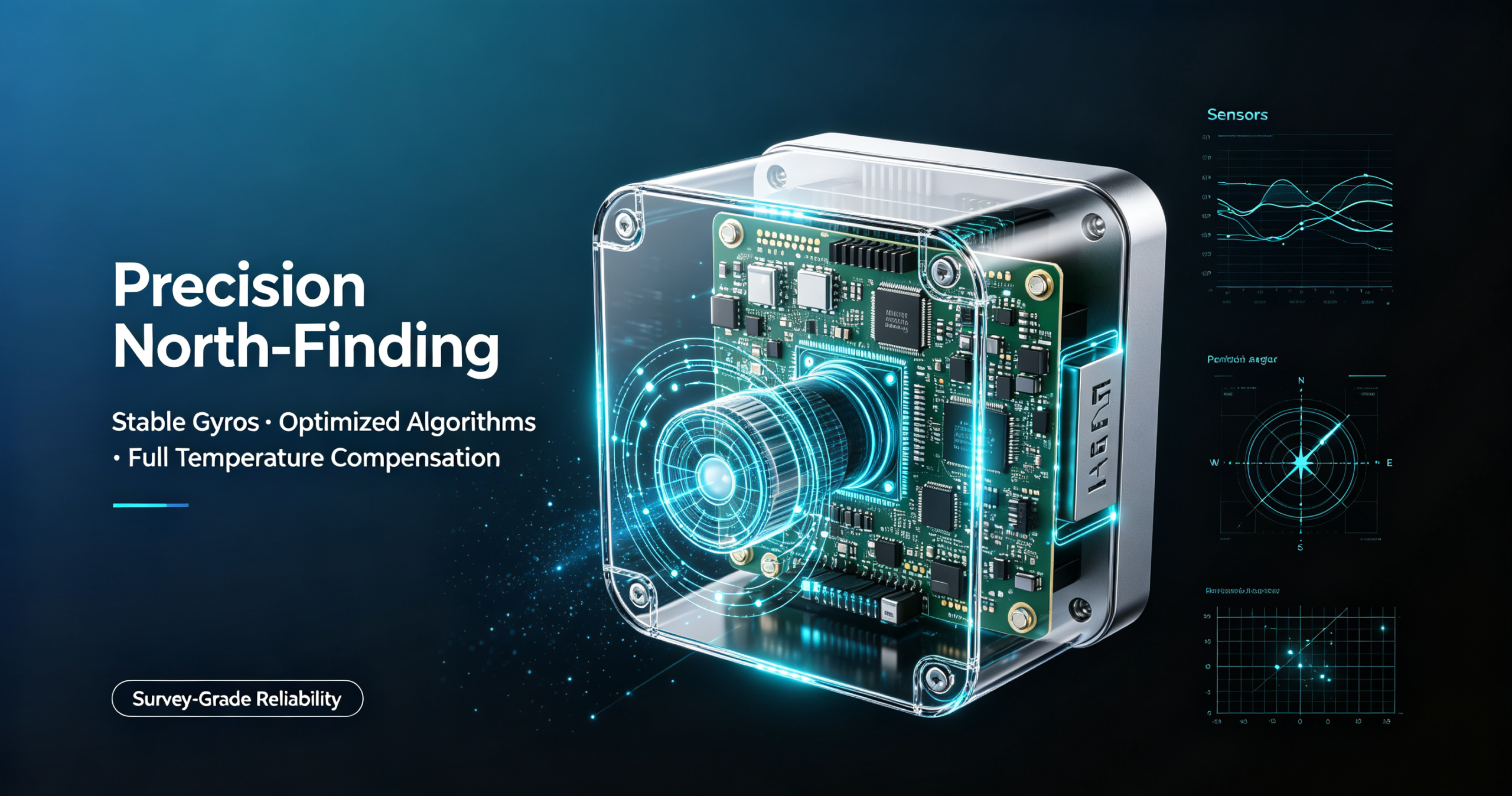
Factor 4: Temperature Compensation
Sensor behavior changes with temperature.
Without compensation:
- Bias drift increases
- Calibration errors grow
- Navigation accuracy decreases
Industrial-grade north finders use compensation algorithms to maintain stability across wide temperature ranges.
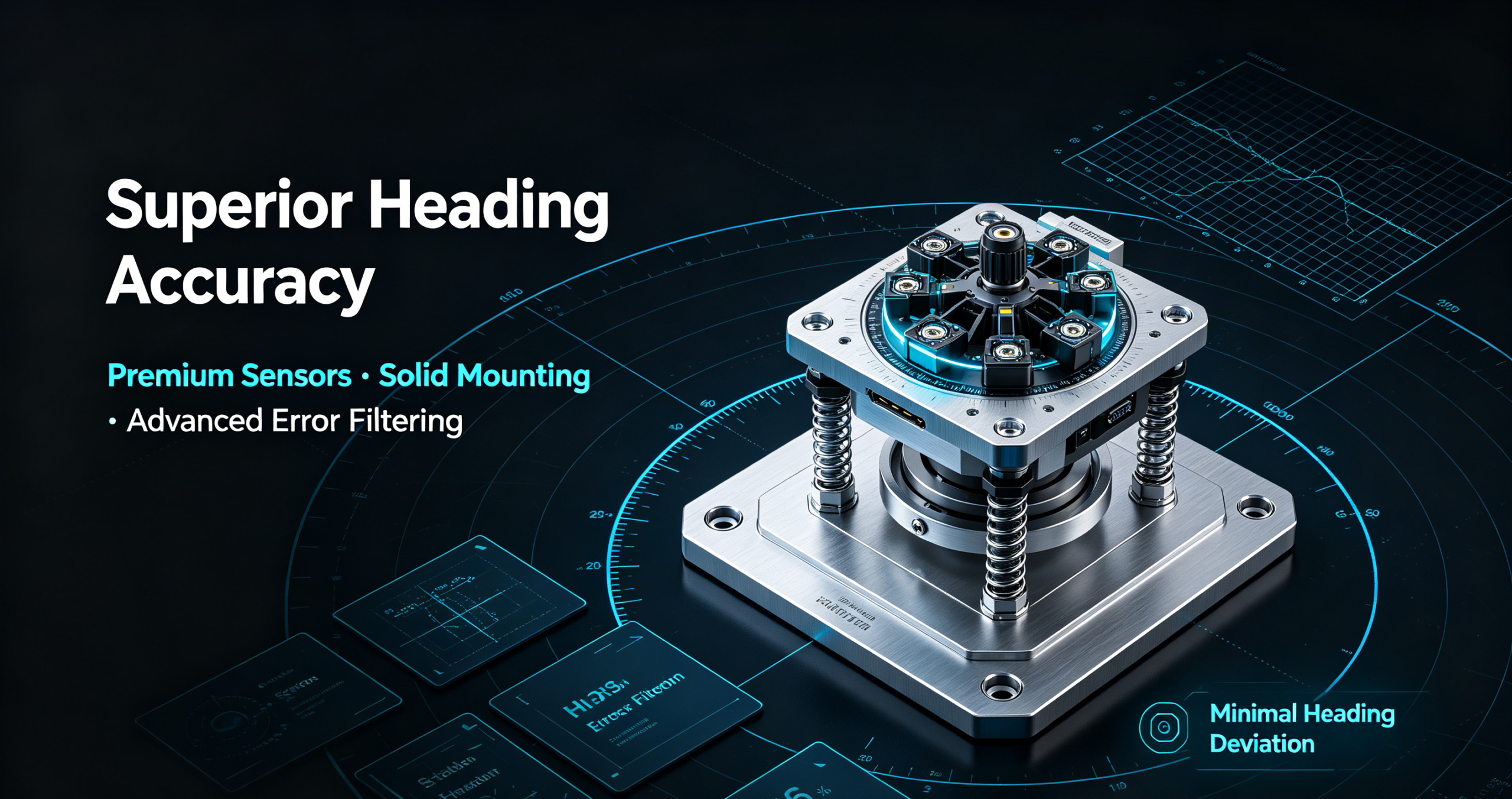
Factor 5: Mechanical Installation
Installation quality is frequently overlooked.
Errors may result from:
- Misalignment
- Structural vibration
- Loose mounting
Even a high-performance north finder cannot achieve maximum accuracy if installation practices are poor.
Factor 6: Navigation Algorithms
Hardware provides measurements.
Algorithms create performance.
Advanced north-finding algorithms perform:
- Sensor fusion
- Error modeling
- Noise filtering
- Dynamic compensation
These functions often determine final system accuracy.
Improving North-Finding Accuracy
Best practices include:
- Proper calibration
- Stable installation
- Temperature control
- Regular verification
- High-quality sensor selection
Conclusion
North-finding accuracy is influenced by sensors, algorithms, environmental conditions, and installation quality.
Understanding these factors enables engineers to select more reliable navigation solutions and achieve better field performance.